


You keep telling them, 'in a minute.' It was never that you didn't want to.

You have a spot. The back step, the bench at the park, the chair closest to the door.
You didn't pick it. Your feet did.
In a minute, you tell them. And you mean it, every time. Then the minute passes and you find a reason to stay down. Somebody has to hold the jackets. Somebody has to take the picture.
You have gotten good at being that somebody.
Nobody watching would call it a limp. You don't call it anything. It's just how you walk now, at the end of a shift, in the last hour before bed, on the stairs in the morning before your foot loosens up.
By the time you get home, they still have energy. Your feet don't.
You did not decide to become the one who watches. It happened the way things do, one shift at a time, over years.
So here is the trap.
You were told this is genetic. Your mother had the same foot. Or it was the shoes, the ones you wore twenty years ago, the ones the job required.
Or it's just what happens. Feet wear out. You're not twenty-five.
Look at those three explanations. None of them gives you anything you can change today. The genes, the old shoes, the years. There is nothing to do with any of them.
Meanwhile, nobody talked about what is happening to your feet right now, during the hours you spend standing and walking.
So you learned to manage around it.
Here is the part almost nobody says out loud.
A large bunion on a woman who sits at a desk all day can be painless. A modest one on a woman who covers miles every shift can be agony.
It is not the size of the bump. It is the hours you spend standing on it.

Here's the mechanical part, in plain words.
The size of the bump does not always tell you how much it will hurt.
What matters is the pressure going through that joint, and how many times you load it. For someone who spends most of a twelve-hour shift standing and walking, that pressure repeats step after step, thousands of times a day.
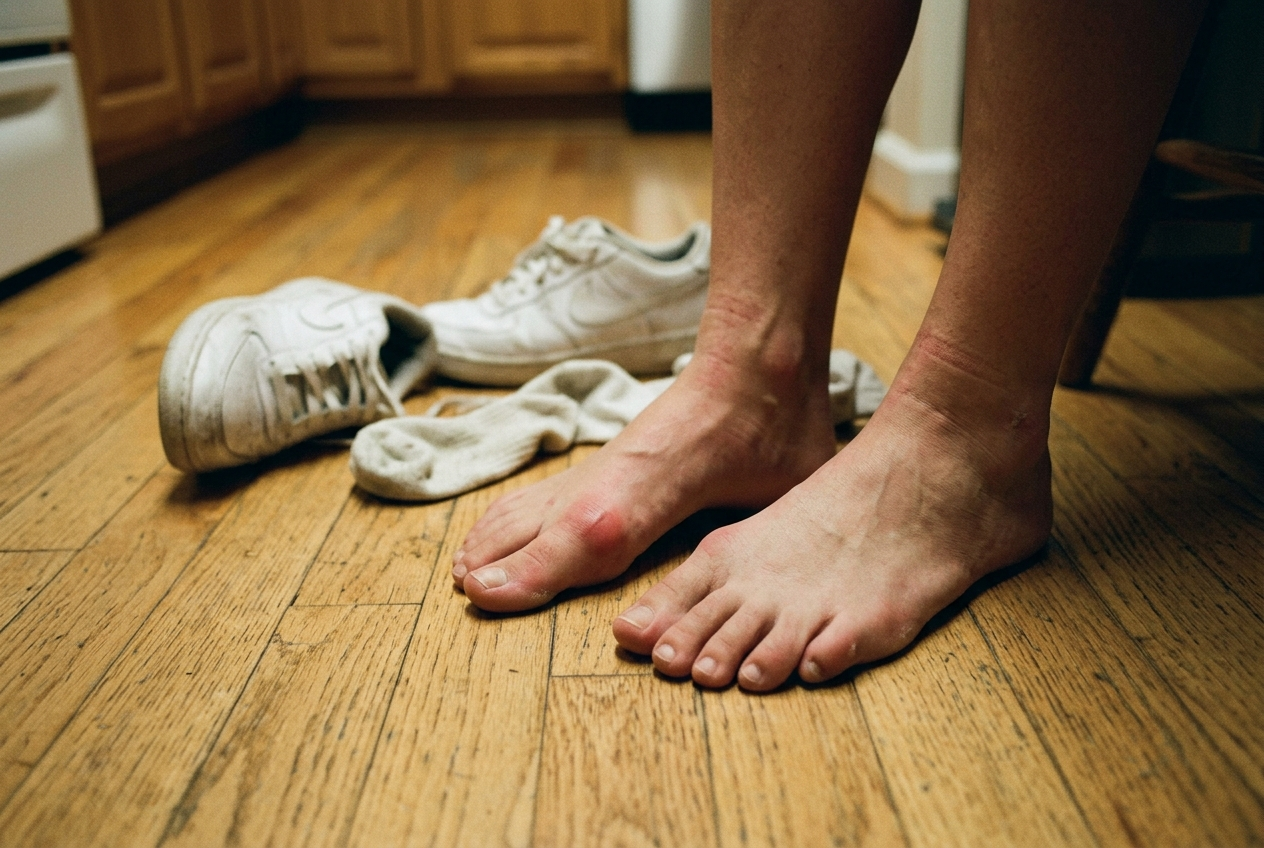
You already knew this. You just didn't know you knew it.
Think about your days off.
If you've noticed your feet are better on those days, not magically fixed, just better, the bunion itself did not suddenly change.
What changed was how many hours you spent standing and walking on it.
You may have already noticed the pattern without ever putting a name to it.
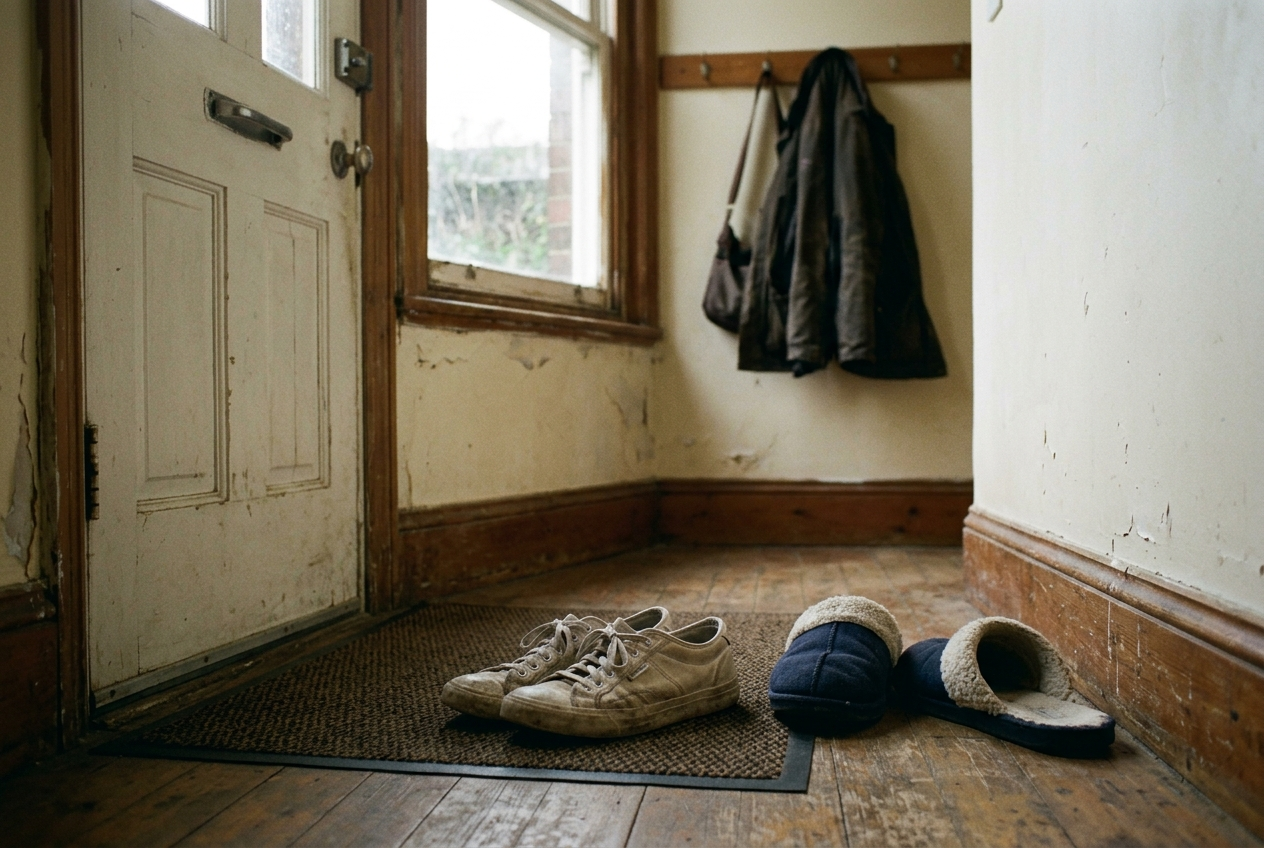
You were never wrong about your foot. You just had nothing that worked on the hours.
And there is one reason this is worth doing something about now: bunions are progressive. That does not mean panic. It means another year of simply enduring the same cycle is not necessarily neutral.
Now go back and look at everything you tried.
The wider shoes. The right instinct. But they make room for the joint. They never hold it. And they compress after a few hours anyway.
The insoles. They change how the load lands. They do not change how long the load lasts.
The toe spacers. Genuinely useful for spacing and comfort. But they only help with the one thing they touch.
The corrector you bought online. The one you wore for half a night and ripped off at 2am. It was rigid, it was bulky, and it hurt. Right idea, wrong build.
Rest, ice, ibuprofen. They treat the day after. They do nothing to the day itself.
None of them were wrong. Each one only ever covered one part of your day, or one part of the problem.
Nobody ever gave you a plan for both halves of your day.
That is not you failing. That is a category that only ever built for half your day.
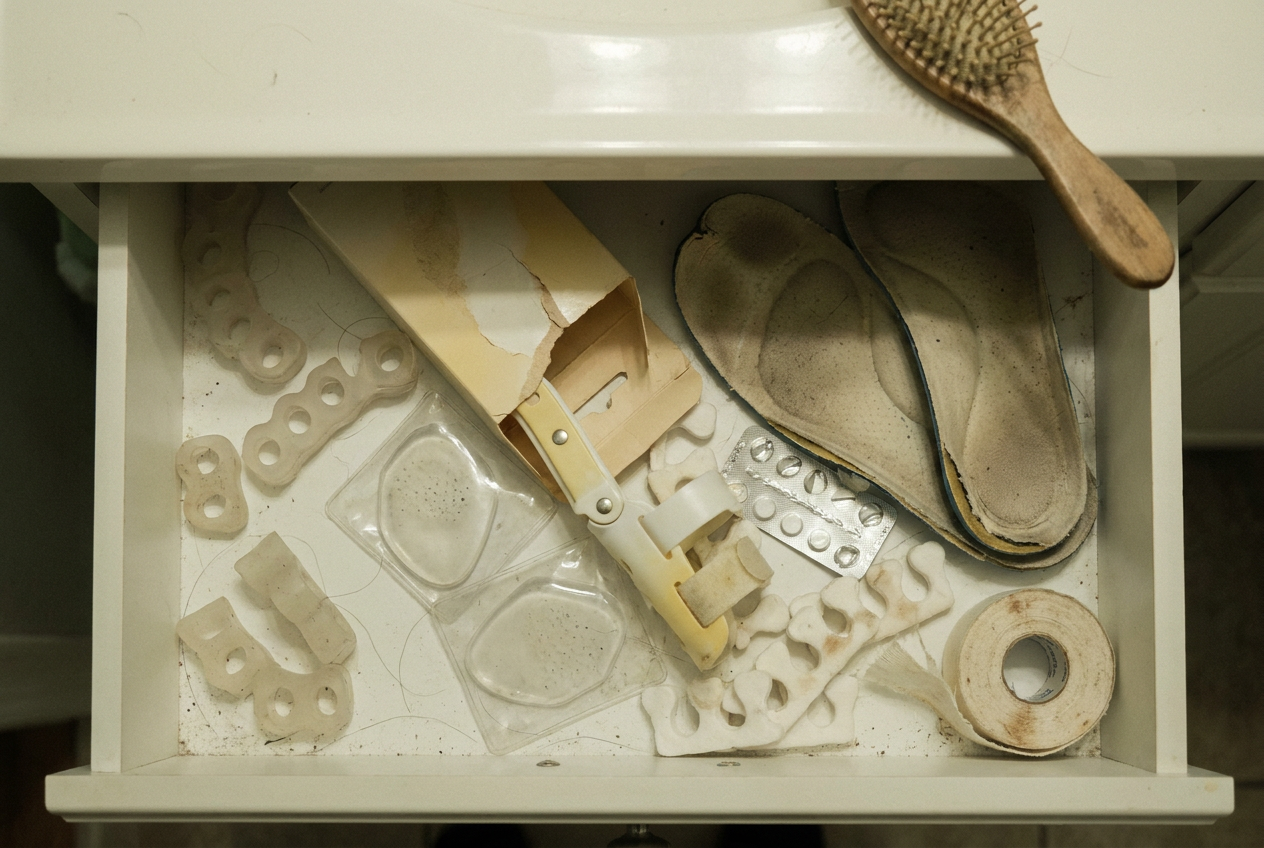
So why didn't the night splint work either?
Maybe you tried one of those too. Maybe your podiatrist waved the whole idea off.
Here's the strange part. Night splints are one of the few non-surgical approaches in this category with published research behind them. A 2022 systematic review in Arthritis Care & Research found evidence of pain reduction with non-surgical approaches including night splints. That does not make a splint a cure. But it does mean this is one part of the category with actual published research behind it.
Hurn, Matthews, Munteanu & Menz (2022), Arthritis Care & Research.
That matters in a category where almost everything seems to come with a promise and very little explanation.
So why did yours end up in the drawer? Two reasons.
It was rigid and bulky, so you took it off at 2am. A splint you cannot sleep in does nothing.
And even if you wore it through the night, morning created a different problem. The splint had to come off, and you were right back inside work shoes for another full shift.
That is the gap nobody built around.
Night resets. Day holds.
That's the whole design brief of the Aftershift 24-Hour Relief System, and it's why there are two parts.
The first part is a hinged night splint, one for each foot. It uses the one long stretch when you're already off your feet. Instead of asking the joint to fight your body weight, it gently positions the big toe while you rest. It is designed to be softer, lower-profile, and hinged so it can move with you in bed, making it easier to keep on through the night than the rigid splints many people end up removing.

The second part is the day kit, and it handles the hours you're back inside shoes. The gel sleeve cushions the bunion area against the inside of a work shoe. The toe spacers help maintain comfortable separation. The five-toe socks avoid squeezing the toes together the way ordinary socks can. It comes free with the pair of splints.
It is not one device pretending to do everything. It is a routine built around the two very different halves of your day.
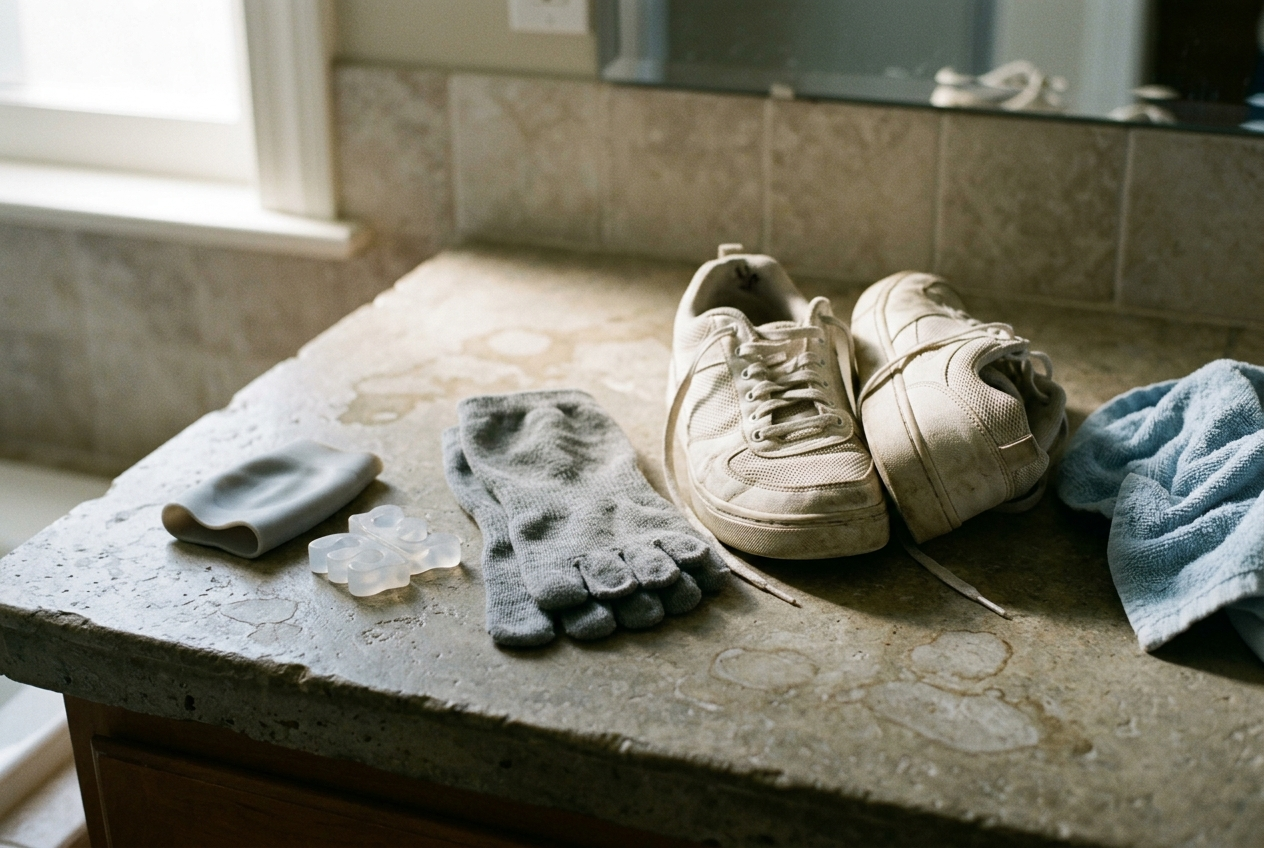
This isn't about pretending twelve hours on your feet won't leave you tired. It's about your feet taking less of what's left of your day.
What this will not do.
It will not make the bump smaller. Nothing you can wear will. Anyone who tells you otherwise is selling.
It is not surgery, and it does not replace surgery. Maybe surgery is something you'll consider someday. But if your income depends on being on your feet, weeks of recovery are not a small scheduling problem. You've probably already done that math. This is something you can do while surgery isn't practical.
And it will not make a twelve-hour shift feel like nothing. Thirteen hours on your feet will make anyone's feet hurt.
The night splint uses the hours you are already off your feet for gentle positioning. The day pieces help manage rubbing, shoe pressure and toe crowding once you are back inside work shoes.
The goal is not correction. The goal is relief and a routine built around the life you actually have. It is not a cure and we are not going to call it one.
Because the real thing you're trying to get back isn't a straighter-looking foot.
It's the part of the day you've started sitting out.
The whole thing is $79.
Here's what's in the box, priced out.
The guarantee is 120 days, and it starts the day the box arrives, not the day you order. If it isn't helping, you get a full refund and you keep everything. No return label, no box to find. If it doesn't help, you're not stuck with the $79.
Ships within 24 to 48 hours. Delivery typically takes another 3 to 5 business days, about 5 to 8 days total.
A single splint for one foot is $59.
The questions you're probably sitting on.
Can I actually sleep in it?
That's the whole design. It's soft, low-profile, and hinged so it moves when you do. If you've ripped a rigid one off at 2am, that's the exact failure this was built against.
Will it hurt?
It should feel gentle, not painful. Follow the included fit instructions, and stop using it if it increases your pain.
Can I wear anything at work?
Yes. The gel sleeve and the socks fit inside a normal work shoe. The splint itself is for nights, not shifts.
How long before I notice anything?
Give it time. This is not a day-one transformation, and we do not want you judging it after two nights. That is also why the guarantee lasts 120 days.
Will it make the bump go away?
No. Nothing you wear will. It's for the pain and the pressure.
What if it doesn't work for me?
You have 120 days from delivery. Email us, full refund, keep everything.
Do I need one for each foot?
If both feet bother you, the $79 system includes one night splint for each foot.
Is this instead of seeing my podiatrist?
No. Keep your podiatrist. This is what you do on all the nights you're not in their office.
One more thing about the step.
You are not asking for a miracle. You want enough relief that your feet do not make every decision after work. Getting to the car without the first ten steps telling on you. Being the one who gets up.
Not pain free. Just not the one on the step.

The next time they ask, "Mom, come play," maybe you don't have to answer "in a minute."
120-day guarantee from delivery. Full refund, no return, keep everything.